Logseq Review 2026: Local-First Outlines and a Free Knowledge Graph
Verdict: Logseq is still one of the best free local-first outliners for personal knowledge graphs in 2026. Choose it if you think in bullets, want Markdown/Org files on disk, and care about ownership. Skip it if you need polished real-time team collaboration or a long-form prose editor first.
Best for: Researchers, students, indie hackers, and privacy-minded knowledge workers who journal daily, link ideas, and query their notes like a personal database.
Not for: Teams that need Notion-style multiplayer docs, writers who primarily draft long essays, or users who want a glossy mobile-first notes app with zero sync fiddling.
Researched 2026 overview based on public product/pricing pages — not a logged hands-on lab of every feature.
What it is
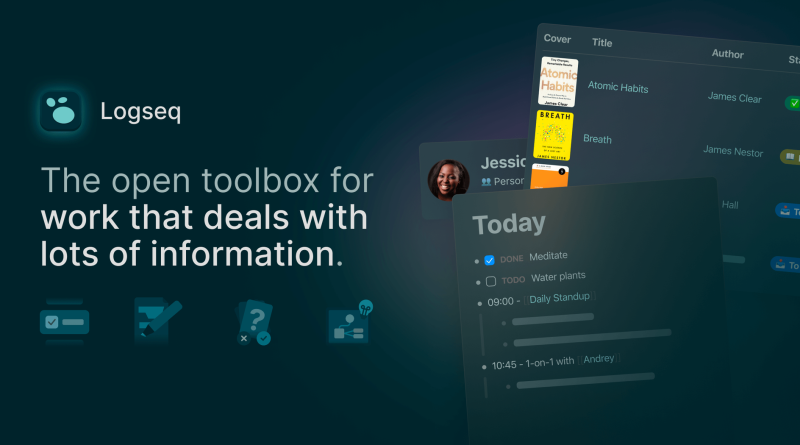
Logseq is an open-source, local-first knowledge management app built around daily journals, nested outlines, bidirectional links, block references, and a graph view. Classic graphs store plain Markdown or Org-mode files in a folder you control; the project has also been evolving a database-backed generation while keeping a file-oriented philosophy for ownership.
Compared with Roam-style tools, Logseq’s pitch is “networked thought without the subscription tax.” Compared with Obsidian, it pushes an outliner-first daily-notes workflow rather than a freeform Markdown vault (though both can link densely).
Who it’s for
People who capture fleeting thoughts as bullets, grow a Zettelkasten-like web over months, annotate PDFs, run queries across blocks, and optionally use whiteboards/plugins. Academics and solo operators who backup with Git or Syncthing. Mobile users who accept that the phone apps are useful but not as refined as Bear/Apple Notes. Teams should treat Logseq as personal PKM, not a company wiki, unless they deliberately engineer sync/collab around it.
Strengths
- Truly free core: Full desktop features without a paywall for local use — rare in this category.
- Local-first ownership: Your graph lives as files (classic) you can back up, diff, and migrate.
- Outliner + graph: Daily journals, [[links]], ((block refs)), queries, and graph visualization fit networked thinking.
- Extensible: Plugins for flashcards, Zotero, AI helpers, and more without waiting on a vendor roadmap.
- Optional Sync: Official end-to-end encrypted Logseq Sync (~$5/month publicly cited) if you do not want to DIY sync.
Trade-offs / Limits
- Learning curve: queries, namespaces, and plugins reward patience; not a five-minute Apple Notes swap.
- Collaboration is not the product’s center of gravity — real-time multiplayer teams usually prefer Notion/Affine/etc.
- Mobile and sync polish lag the best commercial Apple notes apps.
- Platform transition (file graph vs database generation) means you should read current release notes before migrating a huge vault.
- Long-form writing UX is secondary to outlining — novelists may prefer Bear, Ulysses, or Obsidian.
Pricing
Publicly: the Logseq app is free and open source for local use. Optional Logseq Sync is commonly listed around $5/month for official encrypted sync across devices; a higher sponsor-style tier (~$15/month in some 2026 roundups) may add experimental access. DIY sync via iCloud, Dropbox, Git, or Syncthing remains free. Confirm current Sync pricing on Logseq’s official channels before budgeting.
Verdict / Who should buy
Use Logseq if local outlines and a personal knowledge graph are the goal and you are willing to learn the model. Pay for Sync only if official E2E sync saves you time versus Git/Syncthing. Choose Obsidian for plugin-maximal Markdown vaults, Bear for beautiful Apple prose, or Notion for team wikis. For indie PKM on a budget, Logseq remains one of the strongest free bets in 2026.